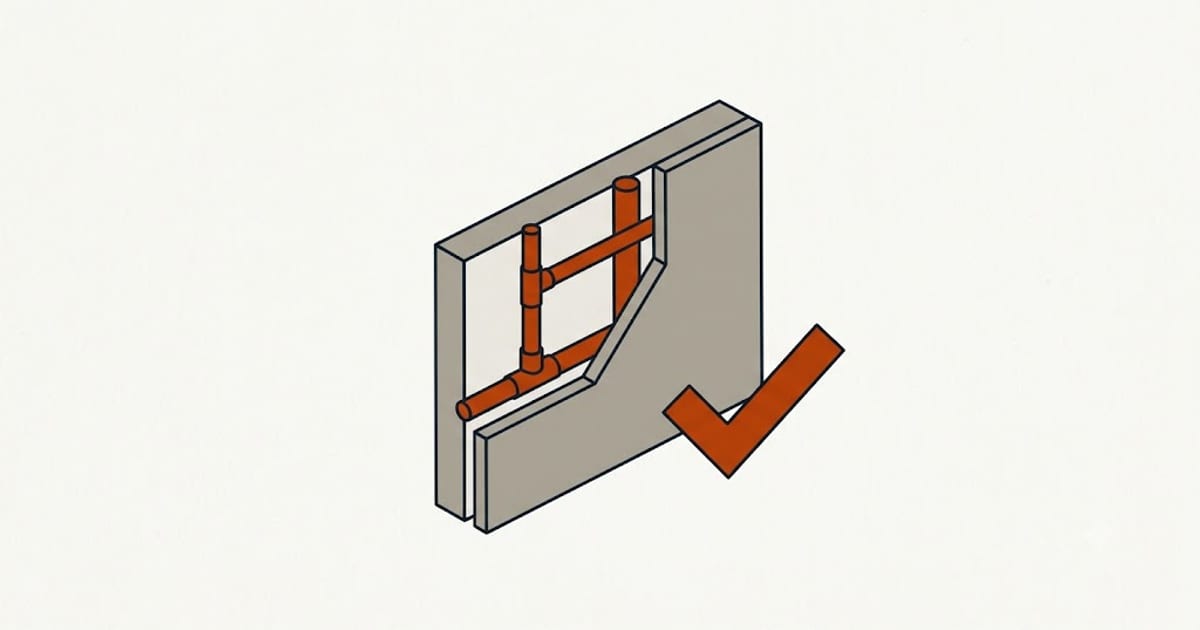
Plumbing permits are inexpensive, and the reason to get one has almost nothing to do with the fee.
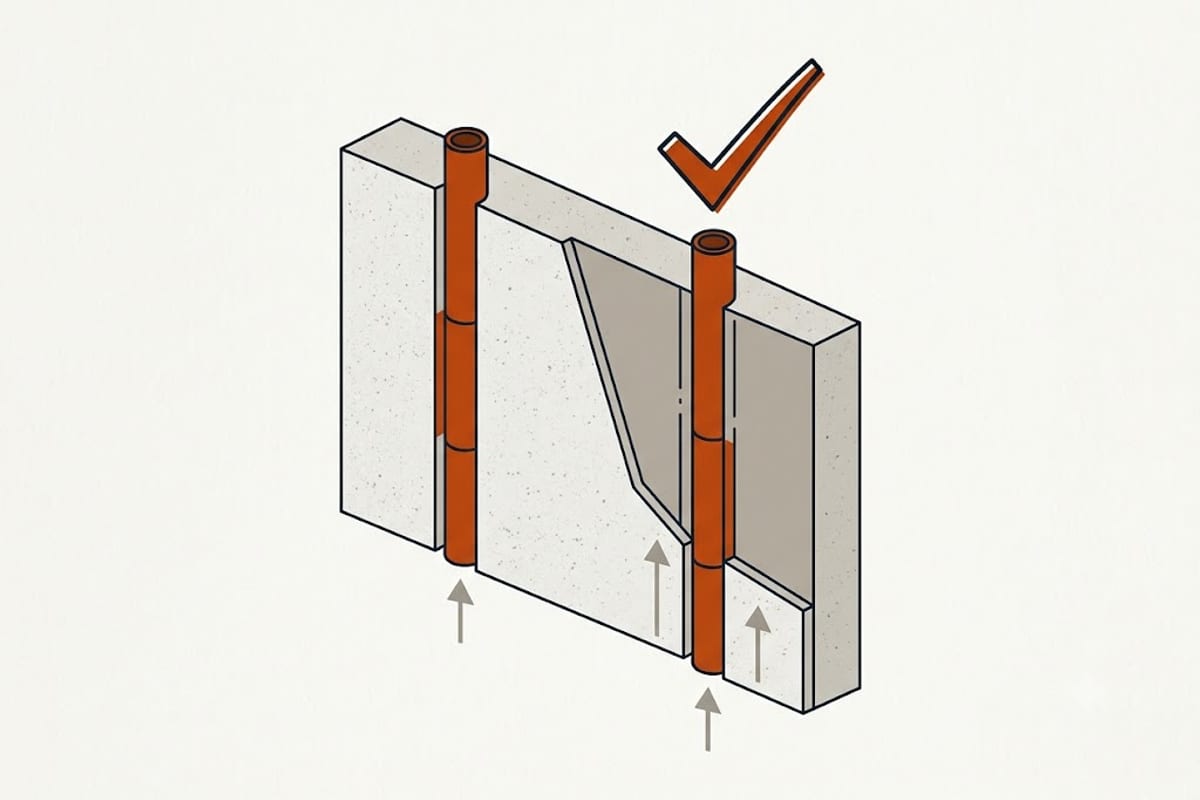
What generally requires one
New fixtures or relocating existing ones.
New or altered drain, waste and vent piping.
Repiping, in whole or in part.
Water heater replacement, in most jurisdictions.
Sewer or water service replacement.
A new bathroom, kitchen or laundry.
What generally does not
Like-for-like replacement of a fixture in the same position, connecting to existing pipework.
Replacing a tap, a stop or a supply hose.
Clearing a blockage.
Requirements vary and the local building department will say in one phone call.
The two inspections
Rough-in, before the walls close. The DWV system is tested — filled with water to a stated head, or air-tested — and the supply is pressure-tested. Pipe sizes, slope, fittings, venting arrangement, support and nail plates are all checked.
Final, after the fixtures are in and connected.
The rough-in is the valuable one. A wrongly sized vent, a sanitary tee laid horizontally, a missing nail plate or a back-pitched drain costs nothing to correct at that moment and a wall to correct afterwards.
What the inspection catches
The things nobody can see later:
Pipe sizes against the fixture unit tables.
Slope on horizontal drains.
Fittings, and which way they face.
Venting — the arrangement, the trap arm lengths, whether a wet vent is a permitted configuration.
Support spacing and protection where pipe passes through framing.
Backflow protection where required.
The pressure and DWV tests holding.
Every one of those is a fault that shows up years later as a leak, a smell, or a blockage that recurs.
Unpermitted work follows the house
At sale, disclosure requirements in most places cover known unpermitted work.
A buyer's inspector who sees new pipework with no permit history will raise it, and the usual outcomes are a price concession, a demand to permit it retroactively, or a demand to open it up.
Retroactive permitting is more expensive and more invasive than doing it at the time, because the walls have to be opened for the inspector to see anything.
Insurers may also decline a claim traced to unpermitted work, which is the version of this problem with the largest number attached.
Homeowner permits
Most jurisdictions allow a homeowner to pull a permit for work on their own primary residence, with the same inspections.
That is a legitimate path for someone competent, and the inspection is a benefit rather than an obstacle — an experienced person checking the work for a small fee, at the one moment it is cheap to correct.
The cost
A residential plumbing permit is typically a modest fixed fee plus a per-fixture component.
Against the work it is minor, and against any of the outcomes above it is negligible. A contractor who proposes to skip it is proposing that the household carry the disclosure problem and the risk.
Scheduling
Inspections are booked a day or two out, longer in busy periods, and the walls wait.
That is part of the project timeline rather than an afterthought, and it is worth asking a contractor how they plan around it — because the pressure to close a wall before the inspector arrives is exactly how the check gets skipped.
What to keep
The permit, the inspection records, and the plumber's licence and insurance details.
At sale those documents answer the questions a buyer's inspector raises, and their absence is what turns a competent piece of work into a negotiating item.
Water heaters specifically
The one item households most often replace without a permit, because it feels like swapping an appliance.
It is also where the code has moved most — expansion tanks, drain pans, seismic strapping, venting and combustion air — so a like-for-like replacement of a twenty-year-old heater frequently does not meet current requirements. The inspection is what catches that, and the requirements exist for reasons that appear in the venting and pressure articles on this site.