Supply Sizing
WSFU to pipe diameter, and what pressure and length do to it.
7 articles
Water supply pipe size for 30 fixture units over a 150 ft run
| Building supply sizeType L copper, 1.025″ bore | 1″ |
|---|---|
| Simultaneous demandfrom the Hunter curve — the whole point of fixture units | 18GPM |
| Supply fixture units | 30WSFU |
| Velocity at that flowceiling is 8 ft/s for cold, 5 for hot | 7ft/s |
| Friction over the run150 ft of 1″ at 18 GPM | 13.6psi |
| Pressure left at the fixtureassuming 60 psi at the main, an 8 psi meter, and one storey of rise | 34psi |
Notes
- 30 fixture units is 18 GPM, not 30 GPM, and that gap is the entire reason fixture units exist. Nobody runs every tap at once. The Hunter curve converts a count of fixtures into the flow that actually happens together, and it flattens hard: doubling the fixtures from 25 to 50 raises demand from 16 to 24 GPM, not from 25 to 50.
- Adding up the fixtures' rated flows instead is how houses end up with pipe two sizes too big. Oversized supply is not harmless: hot water takes longer to arrive because there is more cold water sitting in the line ahead of it, more water is wasted waiting, and the extra volume sits still long enough to matter for water quality.
- Velocity is the ceiling, and it is about noise and erosion, not about pressure. 1″ at 18 GPM runs 7 ft/s. Past 8 ft/s a copper line becomes audible and starts eroding the inside of its elbows; hot water is normally held to 5 ft/s because erosion accelerates with temperature.
- 34 psi left at the fixture is comfortable. The assumptions behind that are worth checking against your own house: 60 psi at the meter, 8 psi lost through the meter itself, and one storey of rise at 0.43 psi per foot.
- The service line from the street is a separate question, and it is usually the real bottleneck. A 1″ building supply behind a ¾″ service from the main is limited by the ¾″. Older houses often have a galvanised service that has narrowed to half its bore with corrosion — no amount of repiping inside the house fixes that.
- Fixture unit values are not intuitive, so use the code table. A bathtub is 4 WSFU, a lavatory 1, a flush-tank toilet 2.2, a hose bib 2.5, a dishwasher 1.4. A typical three-bathroom house lands somewhere between 30 and 45 WSFU once the kitchen, laundry and outside taps are counted.
Building supply size
50 calculations · browse all
- Water supply pipe size for 10 fixture units over a 50 ft run
- Water supply pipe size for 10 fixture units over a 100 ft run
- Water supply pipe size for 10 fixture units over a 150 ft run
- Water supply pipe size for 10 fixture units over a 200 ft run
- Water supply pipe size for 10 fixture units over a 250 ft run
- Water supply pipe size for 15 fixture units over a 50 ft run
- Water supply pipe size for 15 fixture units over a 100 ft run
- Water supply pipe size for 15 fixture units over a 150 ft run
- Water supply pipe size for 15 fixture units over a 200 ft run
- Water supply pipe size for 15 fixture units over a 250 ft run
- Water supply pipe size for 20 fixture units over a 50 ft run
- Water supply pipe size for 20 fixture units over a 100 ft run
- Water supply pipe size for 20 fixture units over a 150 ft run
- Water supply pipe size for 20 fixture units over a 200 ft run
- Water supply pipe size for 20 fixture units over a 250 ft run
- Water supply pipe size for 25 fixture units over a 50 ft run
- Water supply pipe size for 25 fixture units over a 100 ft run
- Water supply pipe size for 25 fixture units over a 150 ft run
- Water supply pipe size for 25 fixture units over a 200 ft run
- Water supply pipe size for 25 fixture units over a 250 ft run
- Water supply pipe size for 30 fixture units over a 50 ft run
- Water supply pipe size for 30 fixture units over a 100 ft run
- Water supply pipe size for 30 fixture units over a 150 ft run
- Water supply pipe size for 30 fixture units over a 200 ft run
- Water supply pipe size for 40 fixture units over a 50 ft run
- Water supply pipe size for 40 fixture units over a 100 ft run
- Water supply pipe size for 40 fixture units over a 150 ft run
- Water supply pipe size for 40 fixture units over a 200 ft run
- Water supply pipe size for 40 fixture units over a 250 ft run
- Water supply pipe size for 50 fixture units over a 50 ft run
- Water supply pipe size for 50 fixture units over a 100 ft run
- Water supply pipe size for 50 fixture units over a 150 ft run
- Water supply pipe size for 50 fixture units over a 200 ft run
- Water supply pipe size for 50 fixture units over a 250 ft run
- Water supply pipe size for 60 fixture units over a 50 ft run
- Water supply pipe size for 60 fixture units over a 100 ft run
- Water supply pipe size for 60 fixture units over a 150 ft run
- Water supply pipe size for 60 fixture units over a 200 ft run
- Water supply pipe size for 60 fixture units over a 250 ft run
- Water supply pipe size for 80 fixture units over a 50 ft run
- Water supply pipe size for 80 fixture units over a 100 ft run
- Water supply pipe size for 80 fixture units over a 150 ft run
- Water supply pipe size for 80 fixture units over a 200 ft run
- Water supply pipe size for 80 fixture units over a 250 ft run
- Water supply pipe size for 100 fixture units over a 50 ft run
- Water supply pipe size for 100 fixture units over a 100 ft run
- Water supply pipe size for 100 fixture units over a 150 ft run
- Water supply pipe size for 100 fixture units over a 200 ft run
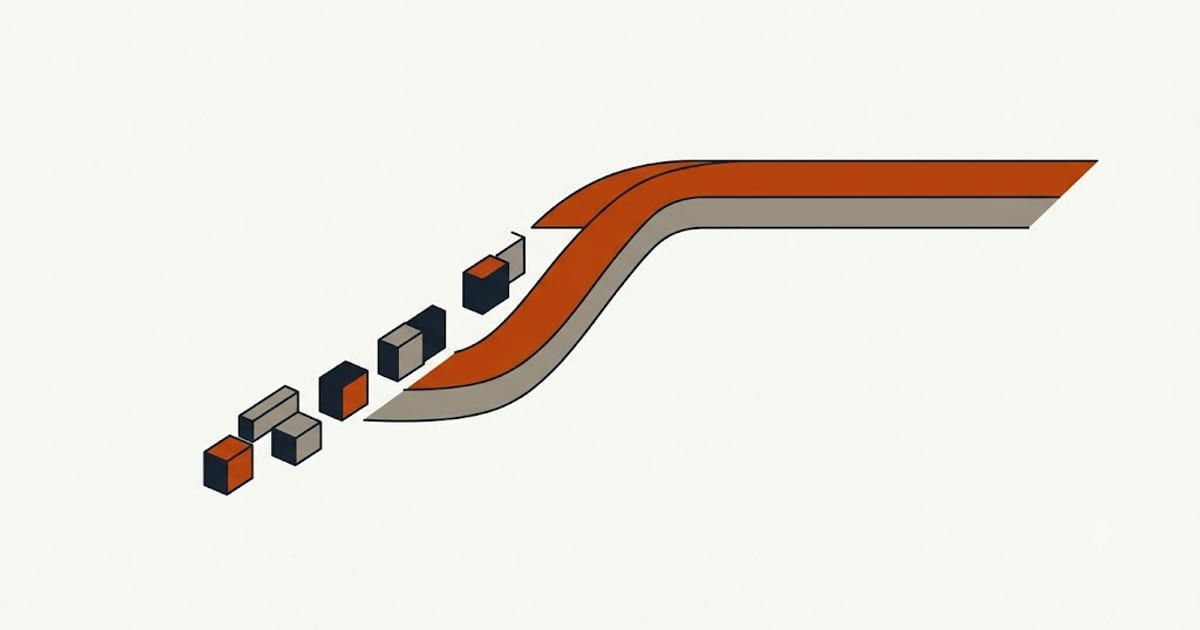 Water Supply Fixture Units — Counting Demand That Never All Happens at Once
Add up every fixture's flow rate and you get a number no house has ever drawn.
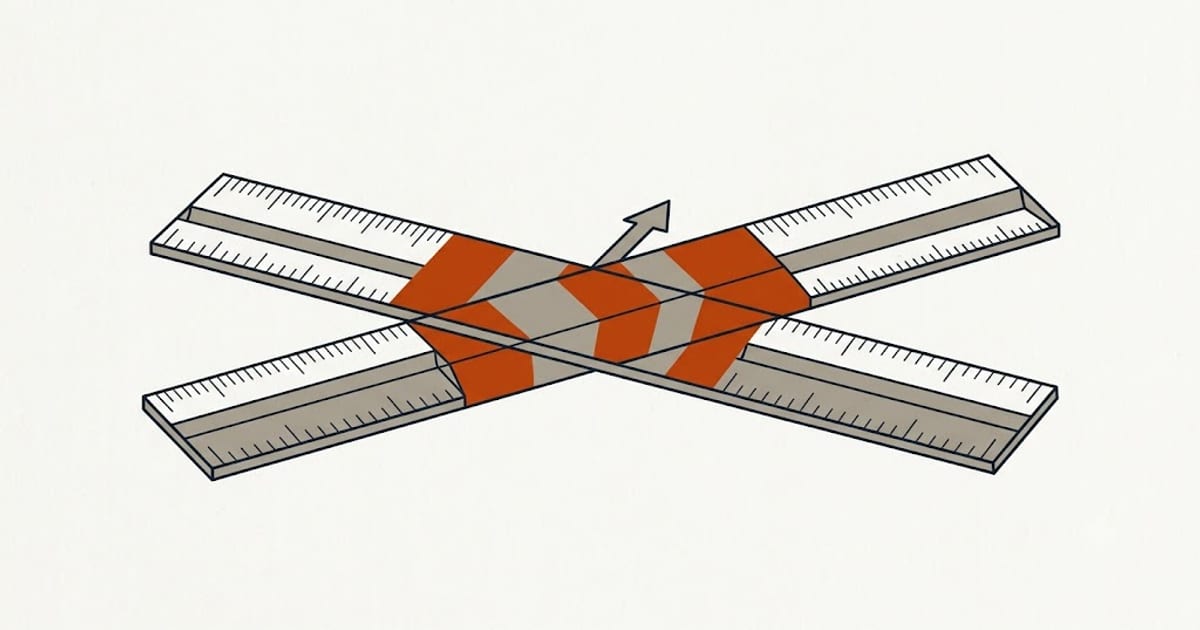 House Water Pressure — The Right Range and What Too High Costs
A gauge on a hose bib costs very little and it answers a question most households have never asked.
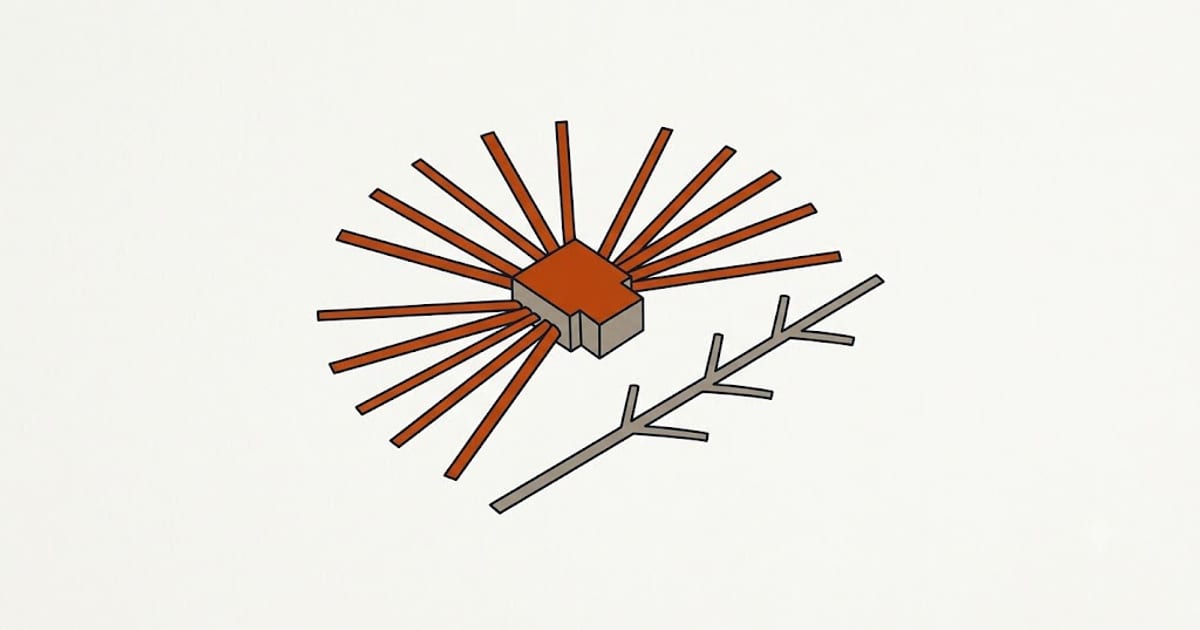 Manifold or Trunk and Branch — Two Ways to Lay Out Supply Pipe
Every fitting buried in a wall is a joint that can leak, and one of these layouts has almost none.
 Shutoff Valves — The Ones That Seize and the Ones That Matter
The moment a valve is needed is not the moment to discover it will not turn.
 Why Hot Water Takes So Long to Arrive
The water heater is not slow. The pipe is full of water that used to be hot.
 Outside Taps and Freezing — Frost-Free Bibs and the Hose That Defeats Them
The tap is designed not to freeze and the hose left on it undoes the design entirely.
 Low Water Pressure at One Faucet Only — Five Causes, Cheapest First
One weak tap is never a pressure problem. Pressure is shared by the whole house — this is a restriction, and it is usually within a foot of the spout.