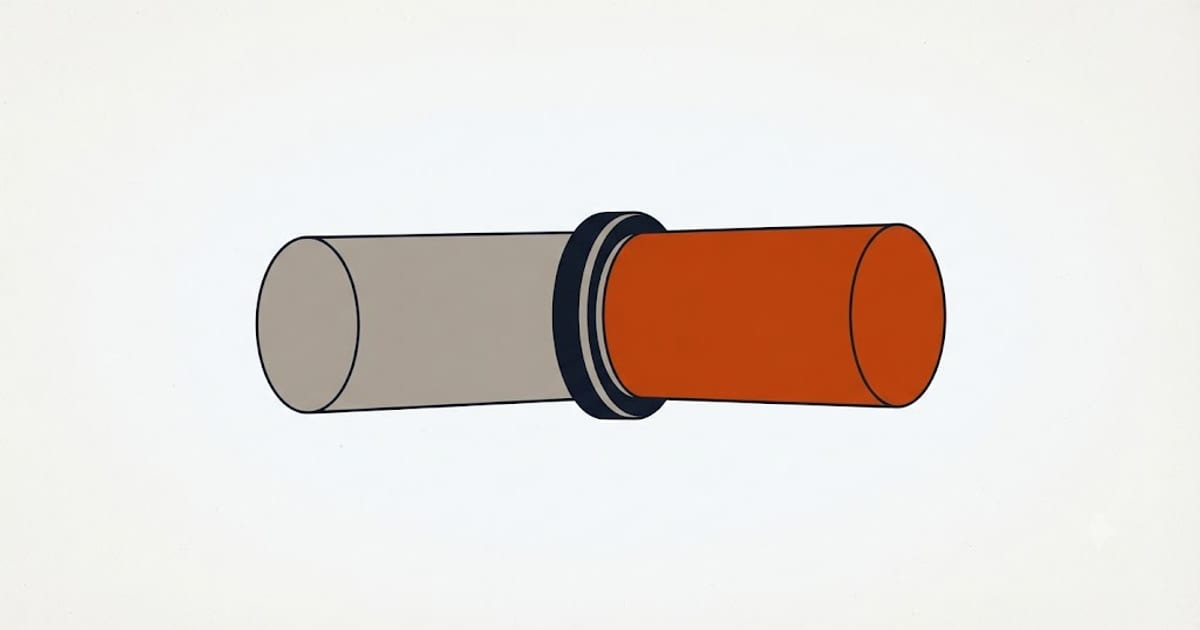
Yes, and it is completely ordinary. Most partial repipes end up as a mixed system, and every plumbing code in the United States permits the transition. The question worth answering is which method to use where, and what actually causes the failures people have heard about.
The four methods
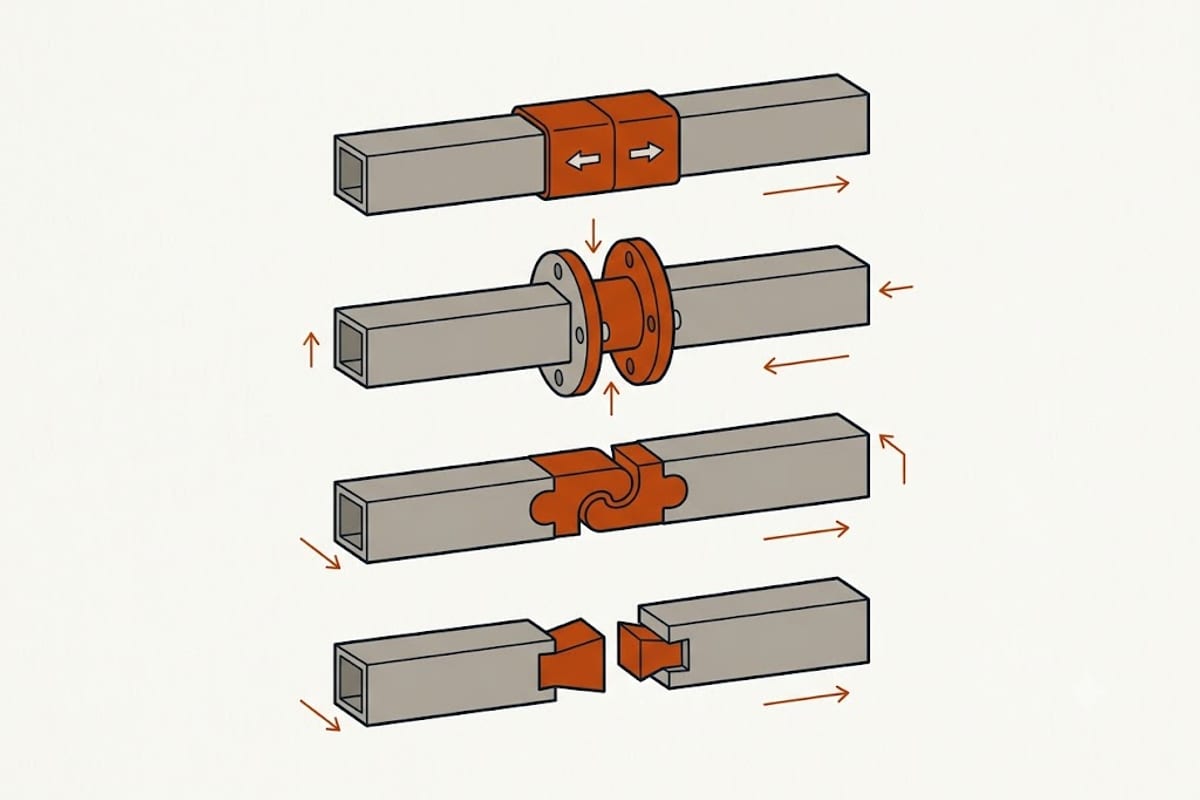
Push-to-connect fittings. Push the copper in one side, the PEX in the other. No tools, no crimping, and they are rated for concealed use by the major manufacturers — though many plumbers still prefer to keep them accessible on principle.
Best for: repairs, awkward positions, anyone without crimping tools. Watch: the copper must be cut square and deburred, and the tube fully inserted to the depth mark. Most failures are an under-inserted pipe.
A sweated adapter into a crimp or clamp fitting. Solder a female threaded adapter onto the copper, thread in a PEX male adapter, crimp the PEX. Cheapest per joint and the most conventional.
Best for: new work where the tools are already on site. Watch: solder the copper adapter before the PEX goes anywhere near it.
A press fitting on the copper side. A pressed copper-to-thread adapter, then a threaded PEX adapter. No flame at all, which matters in a finished space or anywhere a torch is a hazard.
Best for: occupied buildings, tight cavities, insulation nearby.
A PEX manifold fed from copper. Where a repipe is going in properly, the transition happens once at the manifold and every branch is continuous PEX from there. This is the arrangement that gets the most out of PEX: almost no joints buried in walls, and a joint never made is a joint that never leaks.
The dielectric question, answered plainly
You will read that a dielectric union is required. Between copper and PEX it is not, because PEX is a plastic. Galvanic corrosion needs two dissimilar metals in contact with an electrolyte, and there is no second metal here.
The place a dielectric fitting genuinely belongs is copper to galvanised steel, which is a real couple and does corrode. In older houses a repipe frequently involves all three materials, and it is worth knowing which junction actually needs the fitting rather than putting them everywhere.
The brass fitting in the middle of a copper-to-PEX transition is a normal part of the system, not a corrosion risk.
What does cause failures
Heat. PEX has a temperature limit and a torch does not respect it. Soldering within about 18 inches of PEX, or soldering a fitting that is already connected to PEX, damages the tubing invisibly and it fails later. Sweat first, cool, then connect — or use press fittings and avoid the question.
The wrong fitting for the tubing. PEX-A, PEX-B and PEX-C are different products. Expansion fittings belong with PEX-A; crimp rings and clamps are used with PEX-B and C. Mixing systems produces joints that hold pressure on the day and fail months later. Use one manufacturer's system throughout and follow their instructions rather than general advice.
Sunlight. PEX degrades in UV, and the clock starts on the shelf. Tubing that has sat in a yard or a sunlit garage for a season is already partly used up. It must never be run where daylight reaches it, and the leftover coil in the back of a truck is not stock for next year.
Under-insertion. True of push fittings and crimp fittings alike. Mark the insertion depth on the pipe before assembly and you can see at a glance that it went home. Every manufacturer supplies a gauge for checking crimp rings; the reason they do is that this is the common failure.
One thing to expect after a partial repipe
PEX has a smaller inside diameter than copper of the same nominal size. Half-inch PEX has a bore around 0.475 inches against 0.545 for Type L copper, and friction rises with roughly the fifth power of diameter — so the same nominal size loses close to twice as much pressure.
A branch replaced like-for-like in PEX can therefore feel weaker at the fixture, with nothing installed incorrectly. On runs past about 40 feet, or any branch feeding two fixtures at once, going up one nominal size when switching to PEX restores what the bore took away.
This is worth deciding before the walls close, not after somebody complains about the shower.
Where each method belongs
| Situation | Reasonable choice |
|---|---|
| Emergency repair, no tools | Push-to-connect |
| New work, torch already out | Sweated adapter into crimp |
| Finished space, no flame allowed | Press fitting |
| Full or partial repipe | Manifold, transition once |
| Inside a wall you will close up | Any of them, correctly made — but make fewer of them |