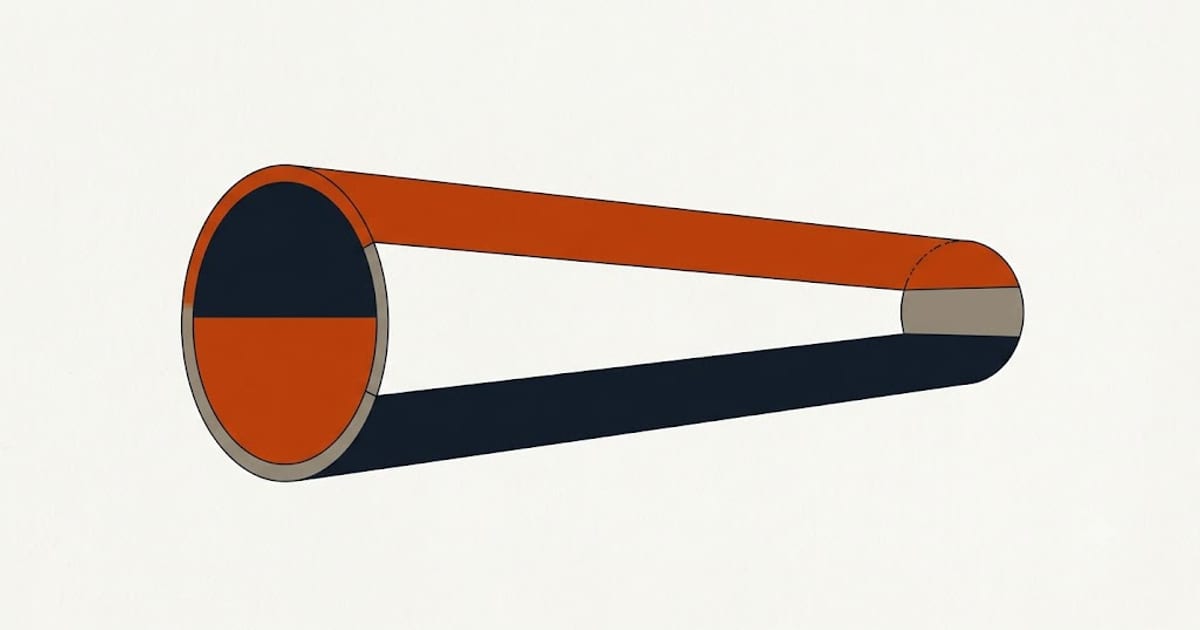
Houses built before about 1960 were commonly supplied in galvanised steel, and most of what was installed then is at or past the end of its life.
What galvanised pipe does
The zinc coating protects the steel until it is consumed. After that the steel corrodes from the inside, and the corrosion products build up as a rough deposit that narrows the bore.
The symptom is progressive loss of pressure and flow — worse at the fixtures furthest from the service, and worse on the hot side, because heat accelerates it.
Households adapt to it gradually and only notice when a section is opened and the bore is visibly a fraction of its nominal size.
Leaks appear at the threads, where the wall is thinnest.
Why patching does not help
Replacing a corroded section with new pipe restores flow through that section and leaves the rest.
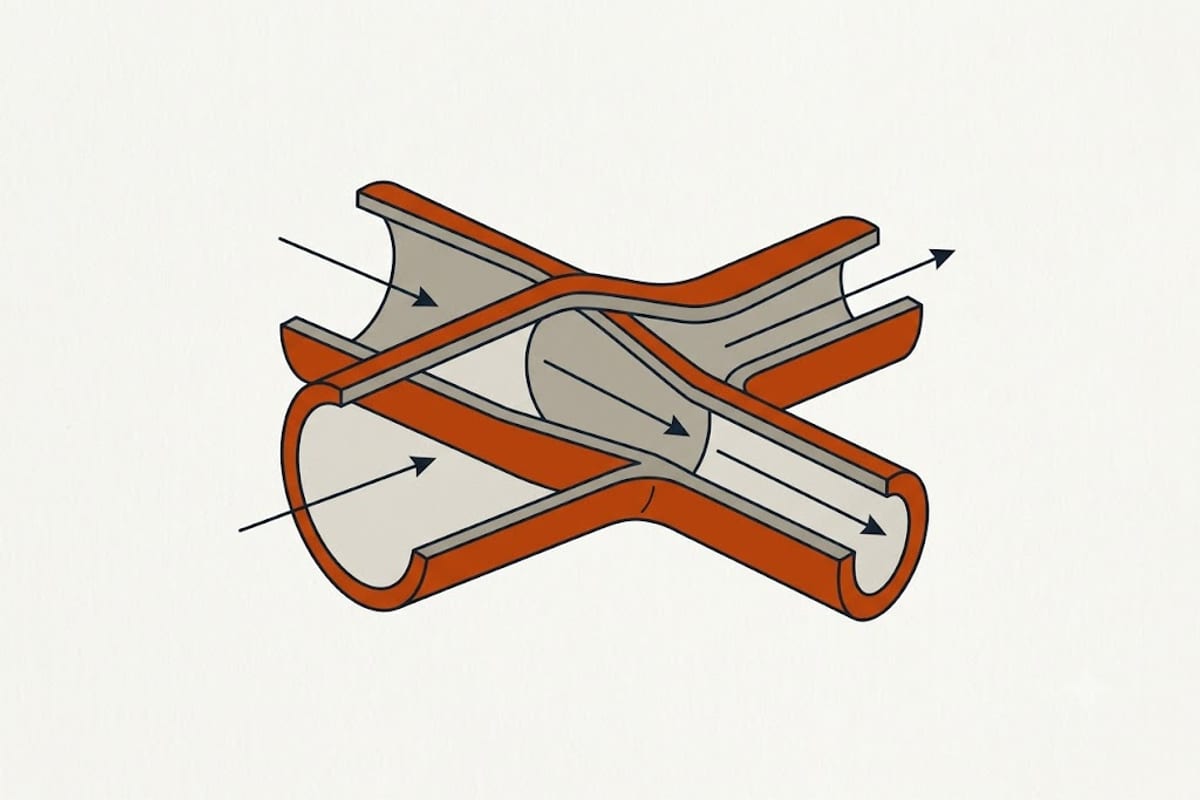
It also creates a junction between new and old, and the flow disturbance at that point tends to accelerate the deposit downstream. A house that has had sections replaced over decades is a patchwork with the same overall behaviour.
Where galvanised supply is the material throughout, the answer is a repipe.
The dissimilar metals problem
Galvanised steel joined directly to copper corrodes galvanically at the joint, from the inside, and fails there.
A dielectric union or a brass fitting between them is required. A house with copper spliced onto galvanised with a plain fitting has a leak on a timer.
Lead
Two separate concerns, both worth taking seriously.
Lead service lines, from the main to the house, used in many cities before the 1980s. Utilities are inventorying and replacing them, and many publish a map or a lookup. A house on a lead service line is a household drinking through lead, and replacement is the answer — including the private-side portion, since replacing only the public half can make exposure worse in the short term.
Lead solder on copper joints, used until banned for potable water in the mid-1980s. It leaches slowly, more in acidic or soft water.
Testing is a first-draw sample from the kitchen tap after the water has stood several hours, which is what captures what has been sitting against the pipe.
Interim measures: running the tap before drawing drinking water, using cold water for cooking and drinking, and a filter certified for lead reduction at the tap. None of these is a substitute for replacing the source.
Polybutylene
Grey plastic supply pipe from the late 1970s to the 1990s, subject to a large class action.
It degrades from the inside where the water is chlorinated and fails without warning. Insurers frequently decline or surcharge, and it is a standard inspection finding.
It is a repipe rather than a repair item, and doing it before the failure is far cheaper than after.
Old drainage materials
Galvanised drains, which corrode and narrow the same way. Slow drains throughout an old house are frequently this rather than a blockage.
Cast iron, which lasts a long time and corrodes at the invert eventually.
Orangeburg, for the building sewer, from the 1940s to the 1970s. Bituminous fibre, it deforms and collapses, and a house of that era with an original line should have it inspected.
What to check when buying an old house
The material at any exposed run — a basement, a crawl space, under a sink.
The date of the house against what was in use then. A water pressure reading. And, in a city that used them, whether the service line is lead, which the utility can usually answer from an address.
Each of those takes minutes and each of them can be a five-figure item.