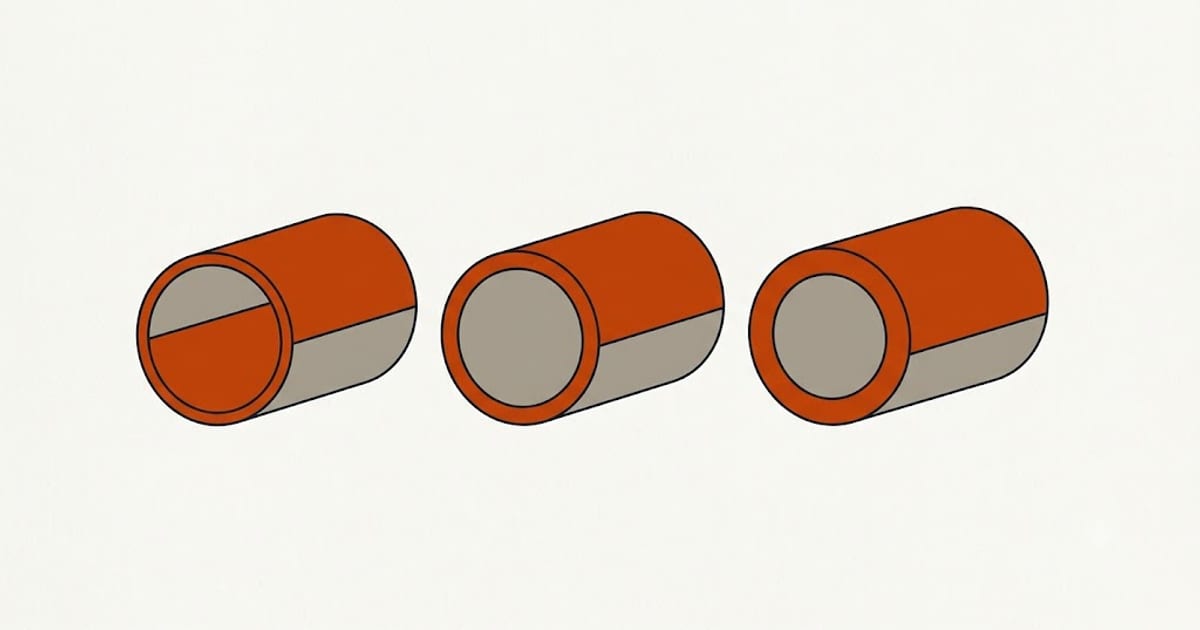
Three materials dominate residential water supply, and they differ in cost, installation method and behaviour over decades.
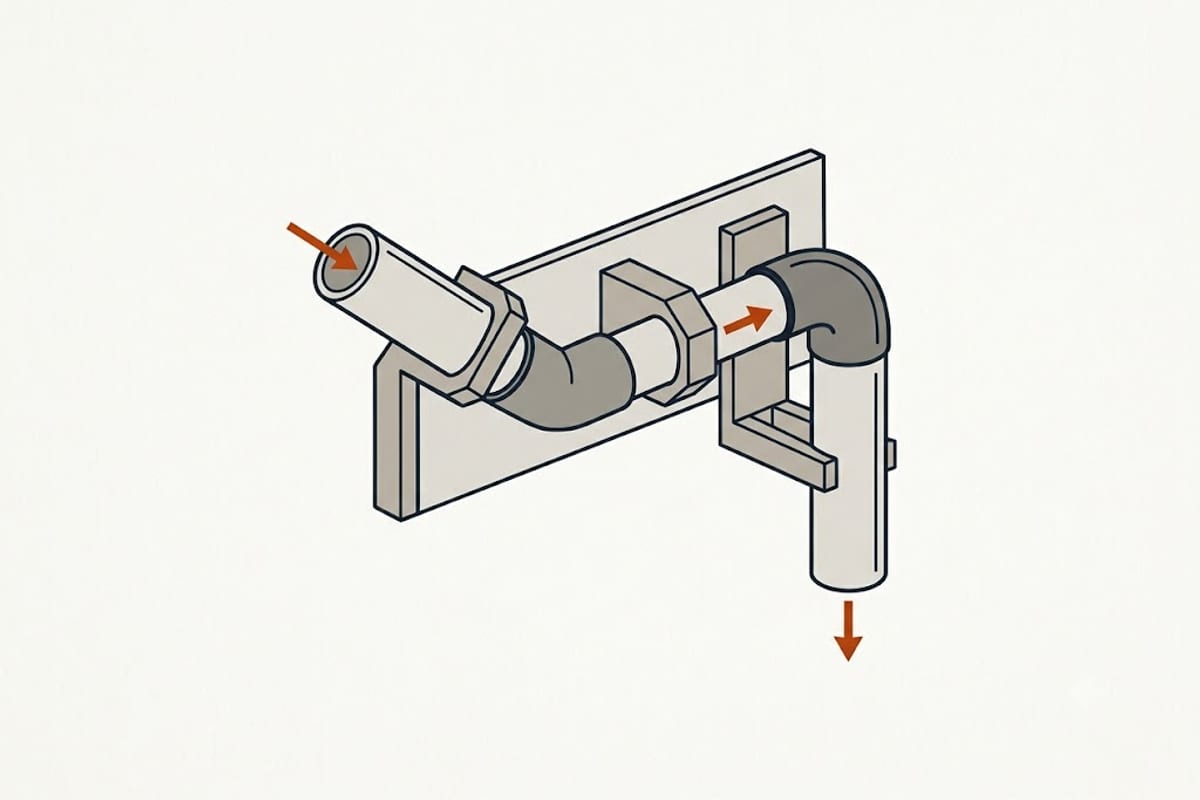
PEX
Cross-linked polyethylene, flexible, supplied in coils.
Advantages: fast to install with far fewer fittings, since it bends round corners; tolerates freezing better than rigid pipe because it expands; quiet, with no water hammer transmitted through rigid runs; inexpensive; and it does not corrode or scale.
Disadvantages: degrades under ultraviolet light, so it cannot be used outdoors or stored in sunlight; rodents chew it; it cannot be used for the last few inches at a water heater, needing a metal transition; and there are several fitting systems that are not interchangeable.
Types: PEX-A is the most flexible and can be repaired with a heat gun after a kink; PEX-B is stiffer and cheaper and the most common; PEX-C is less used.
Fittings: expansion (cold expansion rings), crimp (copper rings), clamp (stainless cinch), and push-to-connect. Each needs its own tool and its own fittings.
Copper
The traditional material, in rigid lengths, joined by soldering or by press fittings.
Advantages: very long service life; tolerates heat and ultraviolet; naturally resistant to bacterial growth; and it is what many buyers and inspectors regard as the quality option.
Disadvantages: expensive in both material and labour; it corrodes in acidic water — the blue-green staining that indicates copper entering the drinking water; it splits when frozen; and soldering in a finished house means an open flame in a wall cavity.
Types: Type L is the usual choice for residential supply; Type M is thinner and cheaper and is not permitted in some jurisdictions.
CPVC
Chlorinated PVC, rigid, solvent-welded.
Advantages: inexpensive, no flame required to join, and resistant to the acidic water that attacks copper.
Disadvantages: becomes brittle with age; intolerant of physical abuse; sensitive to some incompatible materials — certain sealants, insulation and fire-stopping can cause it to crack; and joints require careful preparation and cure time.
What decides it in practice
Repiping a finished house: PEX, almost always. It is fished through walls with a fraction of the openings, and the labour saving is the largest item.
New construction: PEX or copper, according to budget and preference.
Acidic water: not copper, unless the pH is corrected at the point of entry.
Exposed runs, outdoors, or where rodents are a concern: copper, or PEX protected in conduit.
At the water heater: a metal transition regardless, for the required distance.
The manifold option
PEX makes a home-run manifold arrangement practical: a central manifold with a small dedicated line to each fixture.
Each fixture is isolated at the manifold, there are almost no fittings buried in walls, and the small lines deliver hot water quickly because they hold little water.
It uses more pipe and it is the arrangement most likely to be the right answer in a repipe where the walls are open anyway.
Mixing materials
Joining copper to PEX, or either to galvanised, needs the correct transition fitting.
Copper to galvanised requires a dielectric union or a brass fitting to prevent galvanic corrosion, which is what eats the joint from the inside and produces a leak years later.
PEX to copper uses the appropriate adapter for the fitting system in use, and mixing fitting systems from different manufacturers is where DIY repipes leak.
The one that outlasts the argument
Installation quality. A well-installed PEX system outlives a badly installed copper one, and the fitting system the plumber uses daily is the one they will make good joints with.
Polybutylene
Grey plastic supply pipe installed widely from the late 1970s into the 1990s, and the subject of a large class action.
It degrades from the inside where the water is chlorinated, and it fails without warning. Where a house still has it, insurers frequently decline or surcharge, and it is a standard finding at inspection.
It is not a repair item. A house with polybutylene supply is a repipe waiting to happen, and doing it before the failure is far cheaper than after.