
The building drain leaves the house at a fixed level. Anything below it has to be lifted.
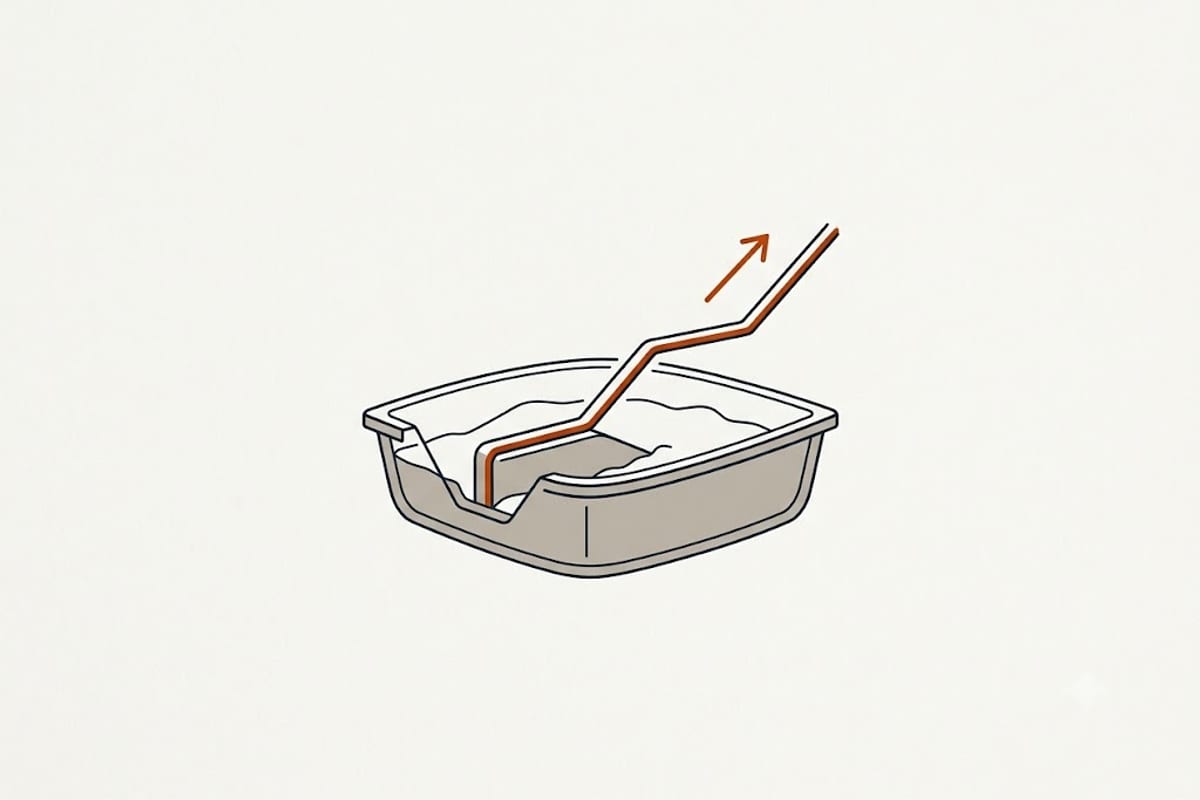
First: find out where the drain is
Sometimes the building drain runs deep enough beneath the slab that a basement bathroom can connect to it by gravity.
That is worth establishing before assuming a pump is needed — a camera and a locator from an existing cleanout will find the line and its depth, and a gravity connection is by far the best outcome.
Option 1: a sewage ejector
A sealed basin set into the floor, with a pump that lifts waste up to the gravity drain.
Requires: breaking the slab for the basin, the pump, a vent for the basin — which is not optional, because the basin is sealed and it has to breathe — a check valve on the discharge, and an alarm.
Handles: a full bathroom including a toilet, since the pump is built to pass solids of a stated size.
Advantages: conventional fixtures, conventional look, and the drainage behaves normally.
Disadvantages: slab work, and a pump that is a consumable.
Option 2: a macerating or upflush system
A unit behind or beside the toilet that grinds waste and pumps it through a small-diameter line to the drain.
Requires: no slab work, a power supply, a vent, and a discharge line that can be run within the manufacturer's limits for length and lift.
Advantages: fast to install, minimal disruption, and it can go where a basin cannot.
Disadvantages: a mechanical unit in the bathroom with a service life; intolerant of anything that should not be flushed, wipes especially; and a distinctive sound.
Option 3: break the slab and drain by gravity
Excavating to reach the building drain and connecting conventionally.
Advantages: no pump, nothing to fail, nothing to power, and the bathroom behaves like any other.
Disadvantages: the most disruptive and usually the most expensive up front — and the cheapest over the following decades.
Where the drain is deep enough and the budget allows, this is the best long-term answer.
The vent, in every case
A sealed ejector basin needs a vent to atmosphere. So do the fixtures. A macerating unit needs one too.
Running that vent from a basement to the existing vent system or the roof is frequently the hardest part of the whole job, and it is worth settling before the layout is fixed.
Backwater valves
A basement fixture is the lowest point in the system, which makes it where a municipal main backup surfaces.
A backwater valve on the building sewer prevents that, and many jurisdictions require one where fixtures are below the level of the next upstream manhole.
It needs to be accessible for inspection, because a valve fouled open is no valve at all.
Maintenance
The pump and its floats, which are consumables. Wipes are the leading cause of failure in both ejectors and macerators.
The check valve, which if it fails lets the discharge run back into the basin and the pump cycle repeatedly.
The alarm, tested periodically and wired on a separate circuit from the pump so a tripped breaker does not silence both.
Spares. A failed pump in a basement bathroom takes that bathroom out of use, and having the correct model on a shelf turns a week into an afternoon.
Power
Every option except the gravity connection stops working in an outage, and the basin holds a limited reserve.
That makes the pump one of the loads worth backing up in a household with a generator, and worth knowing about even without one.