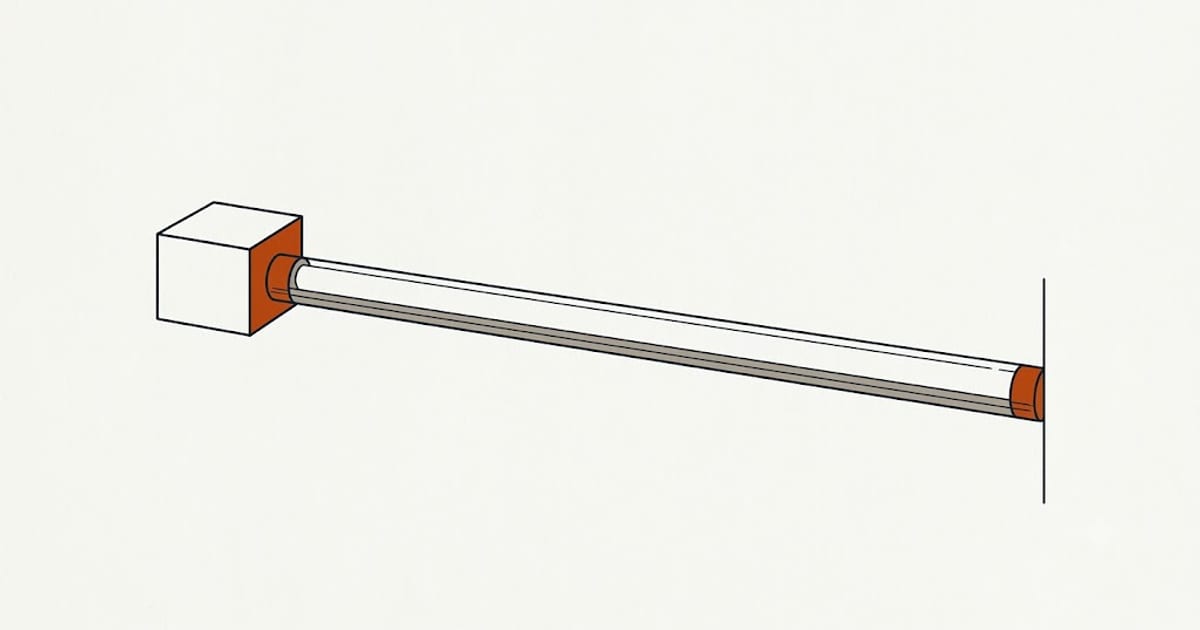
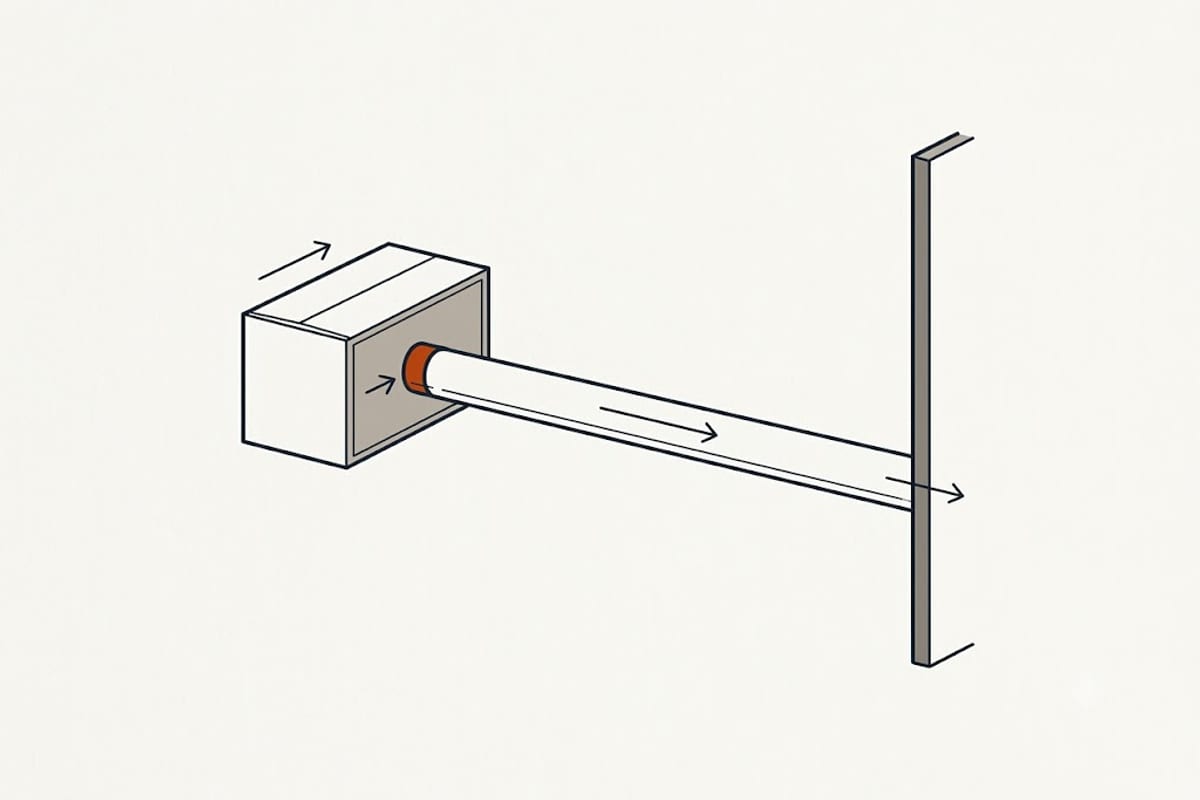
The building drain leaves the house and becomes the building sewer, running to the municipal main or to a septic tank. It is a single point of failure for the whole house.
Whose responsibility
In most jurisdictions the homeowner owns and maintains the line from the house to the property line or to the main, including the connection.
That means a collapse under the road can be the homeowner's problem, and it is worth establishing the local rule before it matters. Some utilities offer coverage, and some insurers sell a service line endorsement.
What blocks it
Roots. The most common cause on older lines. Trees find joints and cracks, enter, and grow into a mass that catches everything.
Bellies. A section that has settled, holding water and collecting solids. Progressive, and no amount of clearing fixes it.
Grease, accumulating on the pipe wall and narrowing it.
Offset joints, where clay or cast iron sections have shifted.
Collapse, in old clay, deteriorated cast iron or Orangeburg.
Foreign objects, including wipes, which are the modern version of the problem.
Orangeburg
Bituminous fibre pipe used from the 1940s into the 1970s, essentially tar-impregnated wood pulp.
It deforms into an oval and collapses, with a service life far shorter than any other material. A house of that era with an original sewer line is on borrowed time, and it is a standard finding at inspection.
The camera
A camera pushed through the line from a cleanout shows exactly what is there, with distances marked.
That is what distinguishes roots — clearable — from a belly or a collapse, which are not. It is worth having before agreeing to any repair, and it is worth having on a house being bought that is more than a few decades old.
A locator on the camera head marks the position and depth on the surface, which is what makes a targeted repair possible rather than a trench along the whole run.
Clearing it
A cable machine (snake) cuts through roots and punches a hole through a blockage. Fast, and it leaves the root mass largely in place to regrow.
Hydro jetting uses high-pressure water to scour the pipe wall clean. Far more thorough, and it should not be used on a line whose condition is unknown — a camera first, because jetting a fragile clay or Orangeburg line can finish it.
Root treatments — foaming herbicides formulated for the purpose — slow regrowth after clearing.
Repair options
Spot repair, excavating and replacing a section, where the fault is local and located.
Pipe bursting, pulling a new pipe through the old one while fracturing it outward. Trenchless, needing a pit at each end.
Cured-in-place lining, drawing a resin-saturated liner through and curing it to form a new pipe inside the old. Trenchless, and it needs the host pipe to be structurally present — it does not fix a collapse or a belly.
Full replacement, trenched, which is the answer where the line has bellies or has collapsed.
Cleanouts
At the point the line leaves the house, and at intervals and changes of direction.
They are what make clearing and camera work routine. A house with no accessible cleanout has its line accessed through a removed toilet or from the roof, at a different price and with a different mess.
Fitting one is a modest job and it is worth doing before it is needed.
What to do about the trees
The species matter — willows, poplars and maples are the usual offenders — and so does the distance.
Roots enter through joints and cracks rather than boring through sound pipe, so a line in good condition resists them. A line that has been rooted repeatedly has openings, and clearing it annually is managing a symptom that will keep returning.