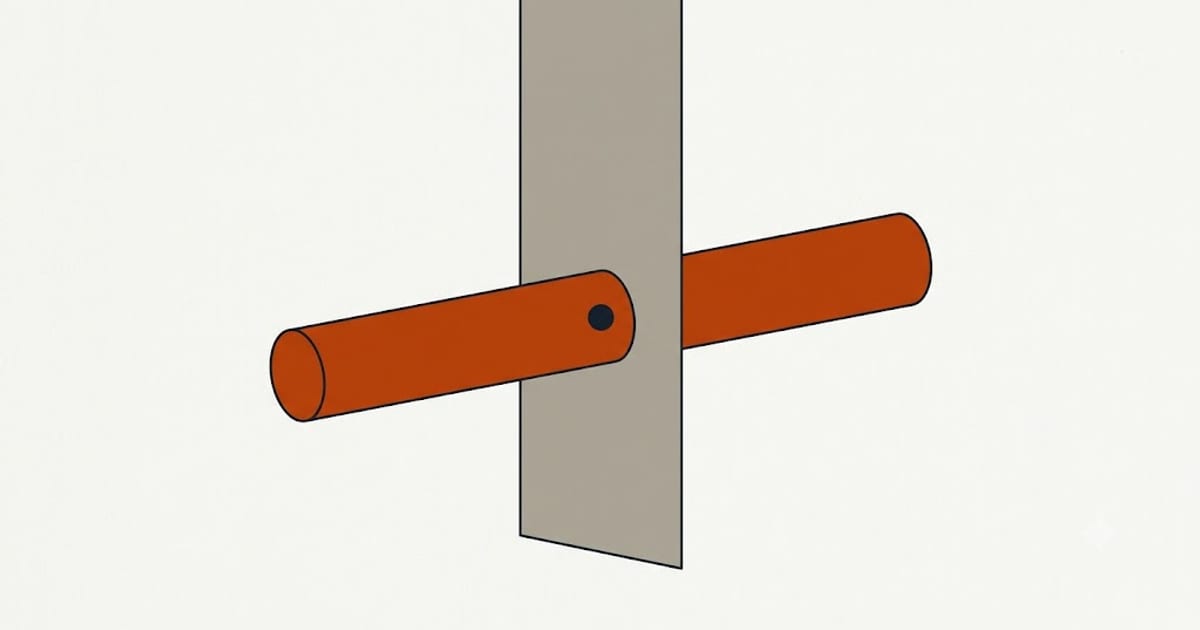
An outside tap is a pipe running through the building envelope, and in a cold climate that is a freeze waiting to happen unless it is arranged not to be.
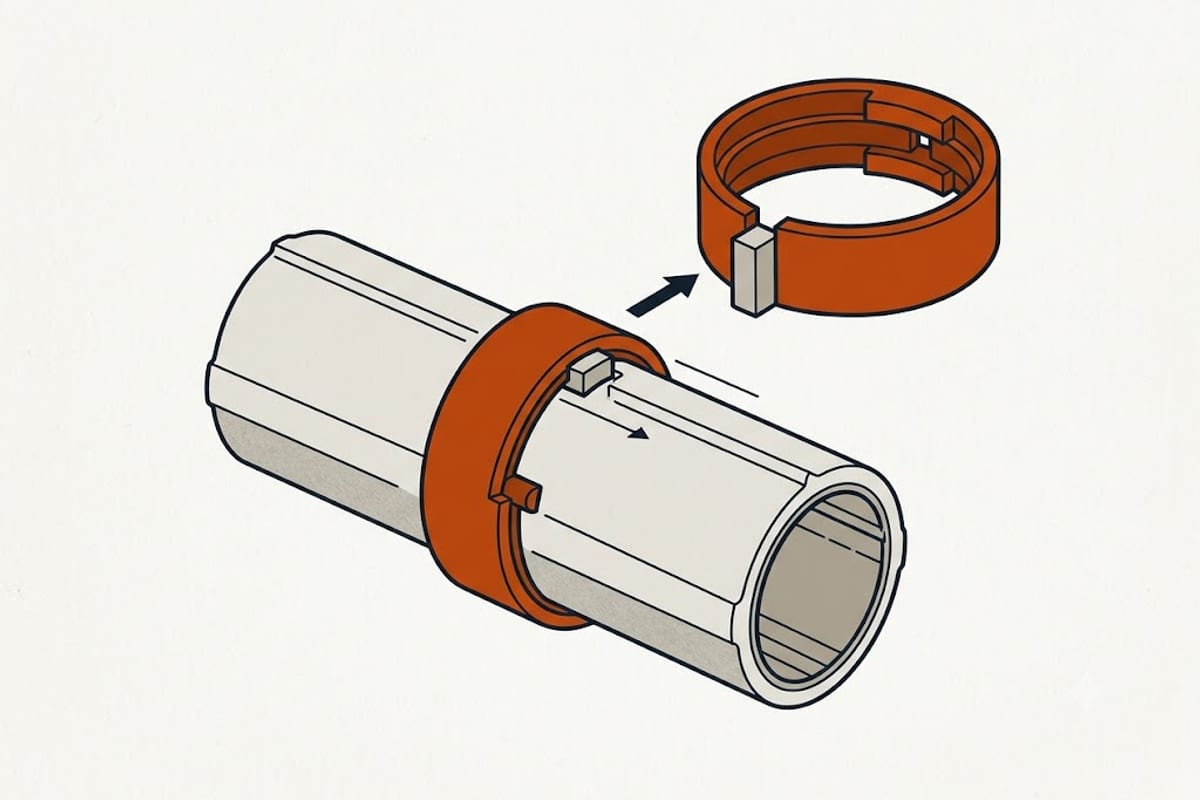
The frost-free sillcock
A long-bodied tap whose valve seat is at the inner end, inside the heated wall, with a long stem reaching it from the handle outside.
When it is closed, the water stops inside the warm space and the exposed length drains out through the spout.
That drainage is the whole design, which means:
It must be installed with a slight fall toward the outside, or the barrel holds water and freezes.
Nothing may be attached to the spout that prevents it draining.
The hose
A hose left attached over winter holds water in the barrel against the closed valve.
That water freezes, expands, and splits the barrel — inside the wall. The split is not discovered until spring, when the tap is opened and water pours into the wall cavity behind it.
It is the most common winter plumbing failure in houses that have frost-free taps, and it is entirely avoidable by disconnecting the hose in autumn.
Ordinary hose bibs
An ordinary tap has its valve at the outside face, so the pipe behind it holds water permanently.
That arrangement needs a separate shutoff inside, closed in autumn, with the outside tap left open to drain.
Where such a shutoff exists it is frequently a small gate valve in a basement ceiling, seized and forgotten. Exercising it annually, and replacing it with a ball valve, is worth doing before the first hard freeze.
Vacuum breakers
Codes require backflow protection on hose connections, because a hose left in a bucket, a pool or a chemical sprayer is a cross-connection with the drinking water.
Frost-free sillcocks generally have an integral vacuum breaker, and add-on ones are available for older taps. The integral ones occasionally drip after use, which is the breaker doing its job and not a fault — though a persistent drip means the breaker needs replacing.
Winterising a house that will be unheated
Closing the main is not sufficient. The system holds water.
The procedure: close the main, open every fixture from the highest to the lowest, drain the water heater, blow the lines out with air where possible, and protect the traps with antifreeze intended for the purpose.
Any outside line, irrigation system or garage supply gets the same treatment. This is a written procedure worth having for a property that sits empty, and it is not something to improvise on the day.
Pipes in outside walls
Supply pipe run in an exterior wall is exposed to the cold, and it is a common cause of a burst in a house that otherwise never freezes.
Where it exists and can be reached, the fix is to reroute it into an interior wall. Where it cannot, the mitigations are insulating on the cold side of the pipe rather than the warm, and leaving the cabinet doors open under a sink in a hard freeze so room air reaches it.
Letting a tap drip in extreme cold works — moving water freezes more slowly and the drip relieves the pressure that actually bursts the pipe — and it is a last resort rather than a plan.
Anti-siphon and quarter-turn models
Current frost-free sillcocks are available with quarter-turn ceramic cartridges rather than compression washers, which last far longer and do not need the handle strained to stop a drip.
Where an old tap is being replaced anyway, the cartridge type is a small extra cost and one fewer thing to service.
Replacing one
A frost-free sillcock is a specific length, chosen so the valve seat lands inside the heated space — 8, 10 or 12 inches, according to the wall.
Fitting one too short leaves the seat in the wall cavity, which defeats the whole arrangement and produces the failure it was bought to prevent. Measuring the wall thickness before buying is the step that gets skipped.