Water pressure is one of the few things about a house's plumbing that can be measured in a minute and that nobody measures.
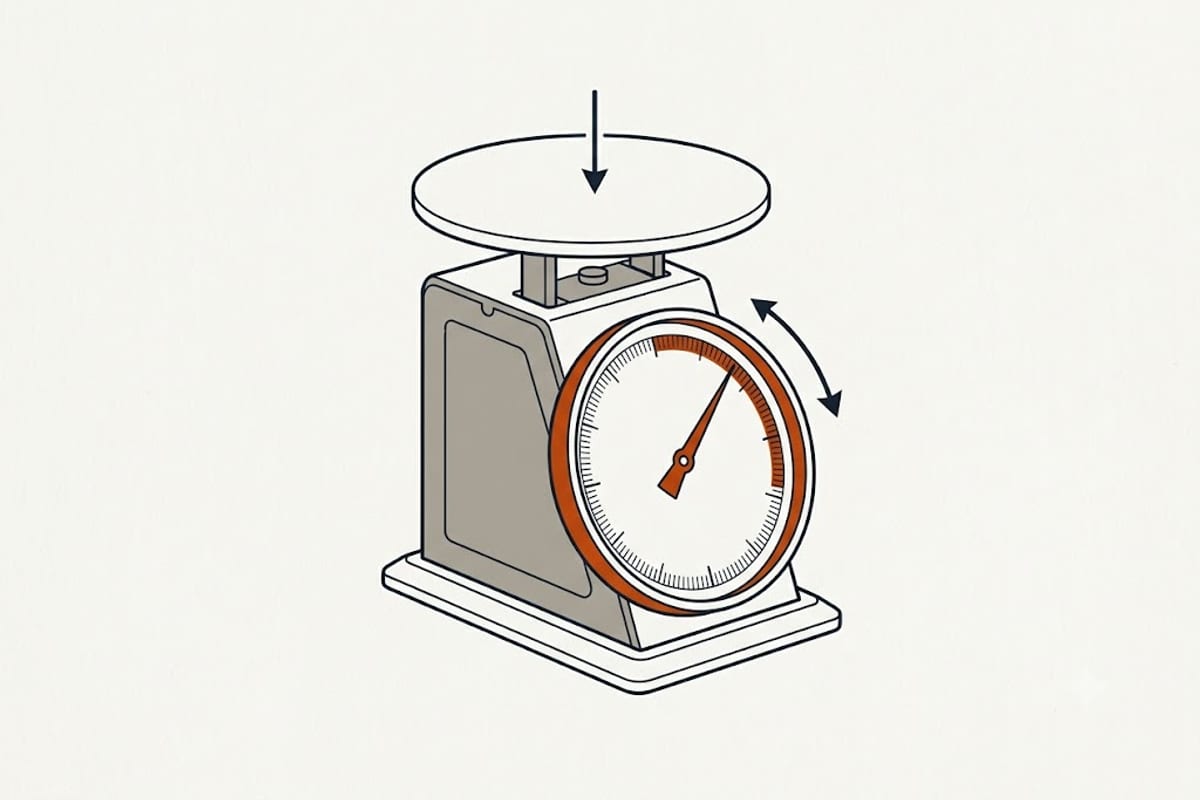
The range
Below about 40 psi — noticeably weak at upper-floor fixtures, and some appliances specify a minimum.
40 to 60 psi — comfortable and easy on the system.
60 to 80 psi — strong, and at the upper end it accelerates wear.
Above 80 psi — codes require a pressure reducing valve, and for good reason.
What high pressure does
Shortens the life of every fitting, valve, supply hose and appliance on the system.
Causes and worsens water hammer.
Increases the severity of any leak.
Stresses appliance inlet valves — washing machines and dishwashers — which is where an expensive failure begins.
Bursts supply hoses, which is the classic cause of a flooded laundry.
Wastes water at every fixture, since flow rises with pressure.
Measuring it
A gauge that screws onto a hose bib costs very little.
Take a static reading with nothing running. That is the supply pressure.
Take it at different times, since municipal pressure varies through the day and is frequently highest at night when demand falls.
Watch for a rising reading with nothing running, which indicates thermal expansion in a closed system with nowhere to go.
The pressure reducing valve
Fitted on the incoming supply, it reduces street pressure to a set figure, usually adjustable in the 25 to 75 psi range.
They are consumables. A PRV lasts perhaps ten to fifteen years and then fails, usually by no longer reducing — so a house that was fine begins showing high-pressure symptoms.
Symptoms of a failed PRV: pressure rising toward street pressure, water hammer appearing, and relief valves discharging.
Adjusting one is a screw and a locknut, with the pressure read at a gauge while adjusting.
The consequence nobody mentions
Fitting a PRV creates a closed system.
Water expands when heated and, with a one-way device on the incoming supply, it has nowhere to go. Pressure spikes each time the water heater fires, and the heater's temperature and pressure relief valve becomes the release — discharging a little each cycle until its seat erodes and it weeps continuously.
An expansion tank is then required, on the cold supply near the water heater, with its air pre-charge set to match the static system pressure.
A dripping relief valve on a water heater in a house with a PRV and no expansion tank is that exact story, and replacing the relief valve does not fix it.
Low pressure instead
Everywhere — a partly closed main valve, a failed or wrongly set PRV, a clogged filter or softener, corroded galvanised pipe, or genuinely low supply.
One fixture — a blocked aerator, a failed cartridge, or a partly closed stop.
Only at peak — a supply or pipe-size limitation rather than a pressure one.
The distinction between pressure and flow matters here: good pressure at one tap and a collapse when three run is a sizing problem, not a pressure problem.
Water hammer
The bang when a fast-closing valve stops moving water suddenly — a washing machine or dishwasher solenoid, typically.
Arrestors at the offending fixture are the correct fix. The vertical air chambers built into older houses waterlog over time and stop working, which is why hammer appears in a house that never had it.
Reducing excessive pressure helps, and it is worth checking the pressure before buying arrestors.
Braided supply hoses
The flexible hoses feeding washing machines, dishwashers, toilets and basins are the most common source of a catastrophic indoor leak.
Replace them on a schedule — the manufacturers' guidance is typically five to seven years — and use braided stainless rather than plain rubber. High pressure shortens their life considerably, which is one more reason to know the number.