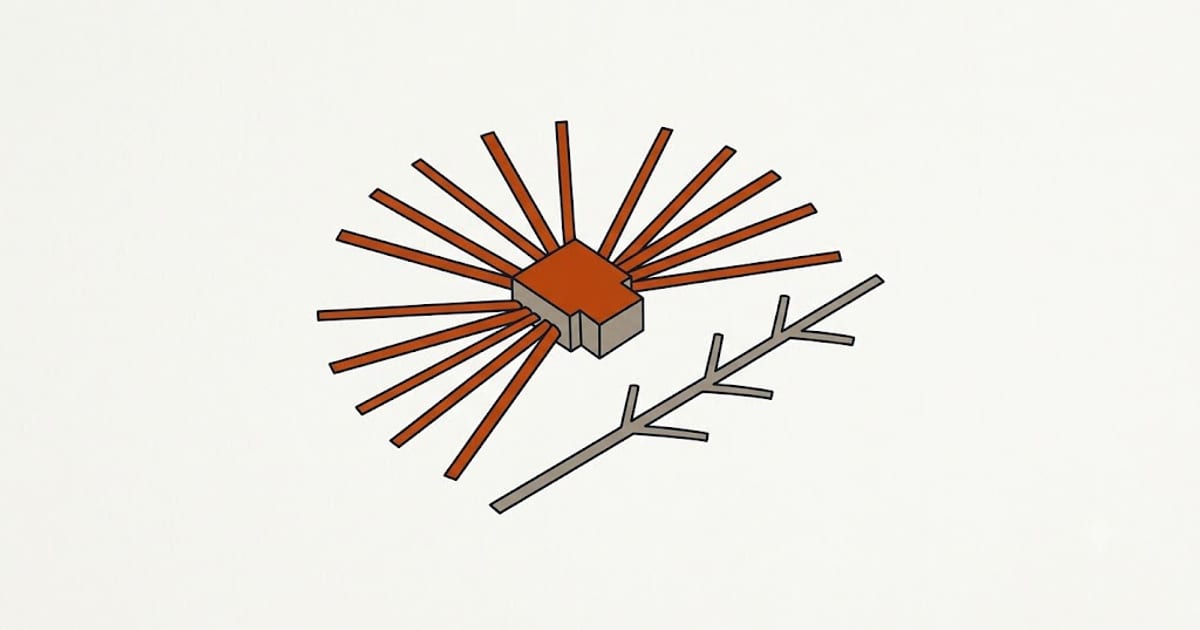
Supply pipe reaches fixtures in one of two arrangements, and PEX made the less traditional one practical.
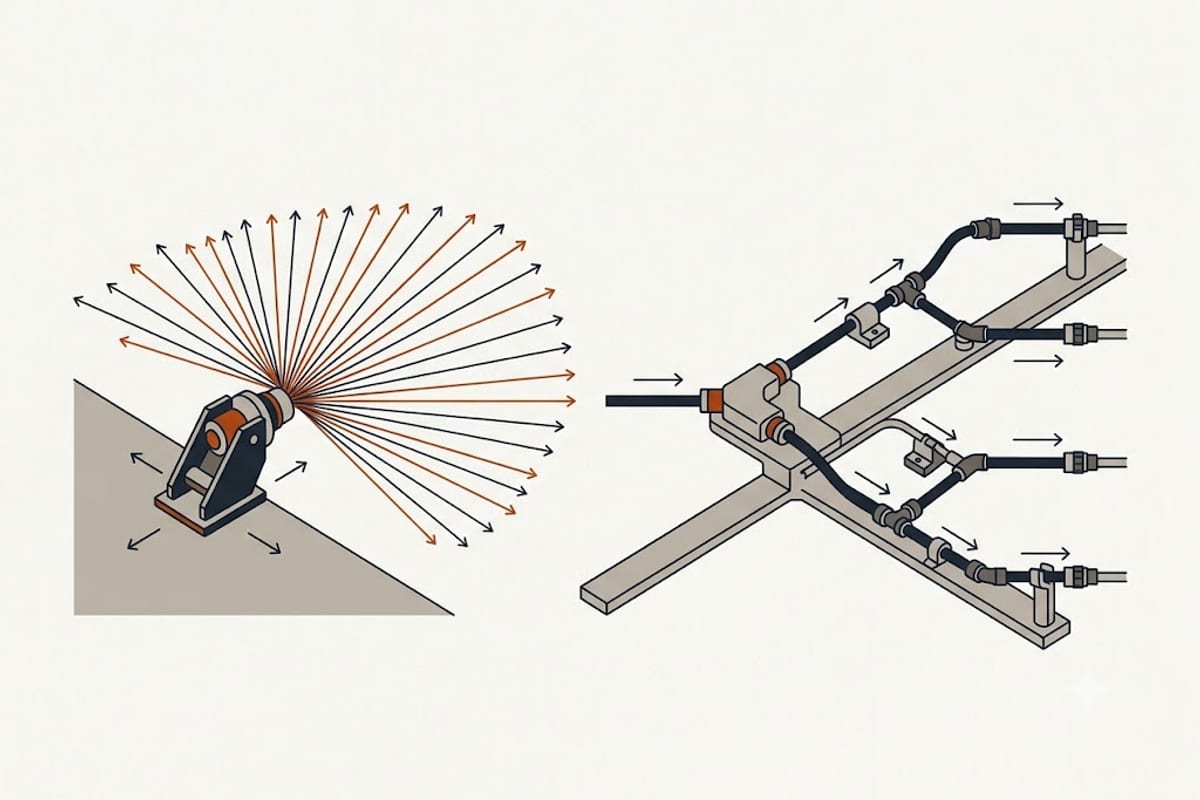
Trunk and branch
A main running through the house with branches taken off it to each fixture or group.
Advantages: less total pipe; familiar to every plumber; and it suits rigid materials, which cannot be run in long continuous lengths round corners.
Disadvantages: many fittings, most of them buried in walls and floors; pressure drops along the trunk as fixtures are added; one fixture's use affects another's; and isolating a fixture means finding its stop or shutting the house down.
Manifold, or home run
A central manifold near the water heater, with a small dedicated line running to each fixture.
Advantages: almost no fittings between the manifold and the fixture, so almost nothing buried that can leak; a shutoff for every fixture in one place; no pressure interaction between fixtures; and small lines that hold little water, so hot water arrives quickly and less is wasted waiting.
Disadvantages: considerably more pipe; a manifold to find space for; and every line has to be run from one point, which is easy in open framing and hard in a finished house.
The hybrid
A trunk to each zone or floor, with a small local manifold serving the fixtures there.
Fewer runs than a full home-run system and most of the benefit, and it is what many current installations actually use.
Why the fitting count matters
A leak in a supply pipe is bad. A leak at a fitting inside a wall or under a slab is worse, because it is hidden and it is expensive to reach.
A home-run system puts every connection at the manifold or at the fixture, both accessible. That is the strongest argument for it, and it is stronger in a repipe than in new construction because in a repipe the walls are being opened once and should not need opening again.
Pipe sizes
Home-run lines are small — commonly ⅜ or ½ inch — because each serves one fixture. That small bore is what makes the hot water arrive quickly.
Trunk lines are sized from the fixture unit total they serve, reducing as fixtures are dropped off along the way.
A common error in a self-designed system is running everything in one generous size, which delays hot water at every tap and wastes water at each draw.
Shutoffs
A manifold gives a labelled valve per fixture in one place, which is genuinely useful — for a repair, for a leaking toilet, for winterising part of a house.
In a trunk and branch system that role falls to the individual stops at each fixture, which are frequently the first thing to seize on an old installation and are worth replacing as they are found.
Which to choose
Repiping a finished house in PEX: a manifold or hybrid arrangement, since the labour to fish lines is similar either way and the benefit is real.
New construction: either, according to budget and the plumber's practice.
Rigid materials: trunk and branch, since copper and CPVC do not run in long continuous lengths.
The thing that matters more
Sizing each branch for the fixtures it serves, and counting the fittings as equivalent length.
A well-sized trunk and branch system outperforms a badly sized manifold, and the layout is the smaller of the two decisions.
Insulating the runs
Small home-run lines hold little water, which is what makes hot water arrive quickly, and they also lose heat quickly over a long run.
Insulating the hot lines — at minimum the first several feet from the heater, and ideally the whole run — reduces both the wait and the standing loss. It is inexpensive while the walls are open and awkward afterwards, which puts it firmly in the category of things to do during a repipe.