The delay at a distant tap is arithmetic: the volume of pipe between the heater and the tap, divided by the flow rate.
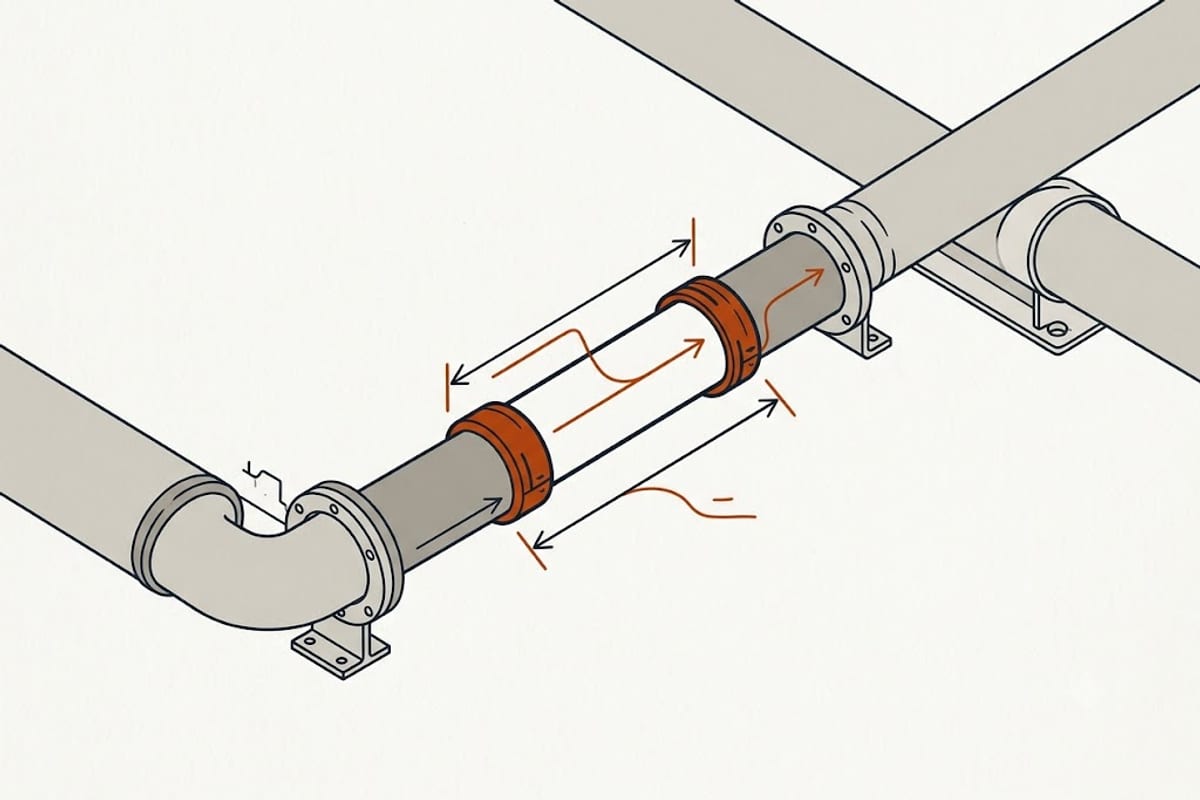
The volume
Roughly, per 100 feet of pipe:
| Size | Volume |
|---|---|
| ⅜ inch | ~0.6 gal |
| ½ inch | ~1.0 gal |
| ¾ inch | ~2.3 gal |
| 1 inch | ~4.1 gal |
A tap 60 feet from the heater on ¾ inch pipe has about 1.4 gallons standing in the line. At 1.5 gallons a minute that is nearly a minute of waiting and 1.4 gallons down the drain, every time.
Why oversizing hurts
This is the counterintuitive part.
A ¾ inch branch to a distant basin holds more than twice what a ½ inch branch holds. Generous pipe sizing, which feels like good practice, directly lengthens the wait and increases the waste.
Branch lines are sized for the fixtures they serve, and smaller is better for this reason as long as the flow is adequate.
What shortens the wait
Smaller branch pipe, sized properly rather than generously.
Shorter runs, which is a layout decision — a house designed with the wet rooms grouped near the heater has short runs by construction.
A home-run manifold with small dedicated lines, which is why that layout delivers hot water quickly.
Moving the water heater closer to the fixtures that use it most, in a renovation.
A point-of-use heater at a remote fixture, removing the run entirely for that tap.
Insulation
Insulating the hot lines does not remove the standing volume, and it keeps that volume warm for far longer between draws.
A run used twice within an hour delivers hot water almost immediately the second time if it is insulated, and cold if it is not.
Insulating the first several feet leaving the heater is the cheapest and highest-value section, and insulating the whole run where it is accessible is better.
Recirculation
A pump circulates hot water through the supply so hot is always near the fixture.
A dedicated return line is the proper arrangement and is practical mainly in new construction.
A crossover valve at the furthest fixture uses the cold line as the return, retrofits without new pipe, and puts warm water into the cold line — which households notice at the tap.
The cost: a loop kept hot loses heat continuously, and on an uninsulated loop that penalty can exceed the water heater's own standing loss.
Control it: a timer running only during the hours hot water is used, a thermostat, or best of all on-demand activation by a button or a sensor, which runs the pump only when someone is about to use the tap.
What to do first
Measure it. Time the wait and catch the water in a bucket.
A few seconds and half a litre — insulate the run and stop worrying about it.
Ninety seconds and two gallons at the main bathroom every morning — that is worth a recirculation system with on-demand control, or a rethink of the pipe size to that branch in the next renovation.
The measurement takes two minutes and it decides between a twenty-dollar solution and a much larger one.
The cold side matters too
Long cold runs through a hot attic or a warm mechanical space deliver warm water at the tap for the first few seconds.
That is the same problem in reverse, and the same remedy applies: insulate the run where it passes through an unfavourable space, and keep the branch sizes modest.
Fixture flow rates
The wait is volume divided by flow, so a low-flow fixture waits longer for the same pipe.
That is not an argument against low-flow fixtures — the water they save far exceeds what is run off waiting — and it is a reason the pipe size to a low-flow fixture should be small rather than generous.