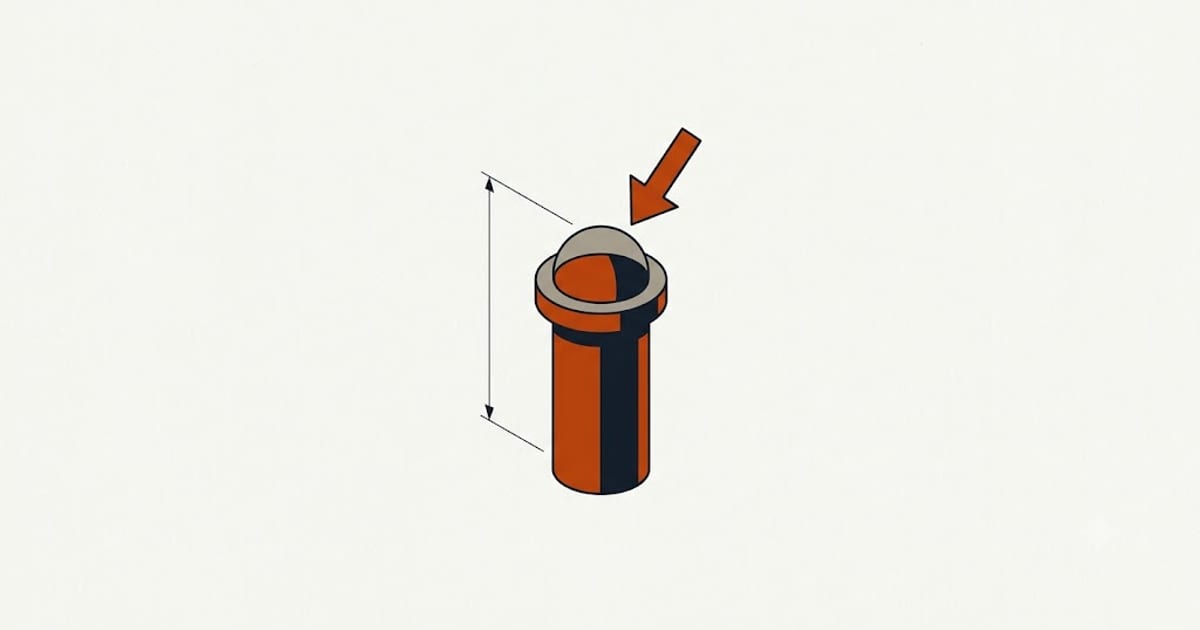
An air admittance valve is a one-way device: it opens under the negative pressure created by a draining fixture and lets air in, and it closes against positive pressure so sewer gas cannot escape.
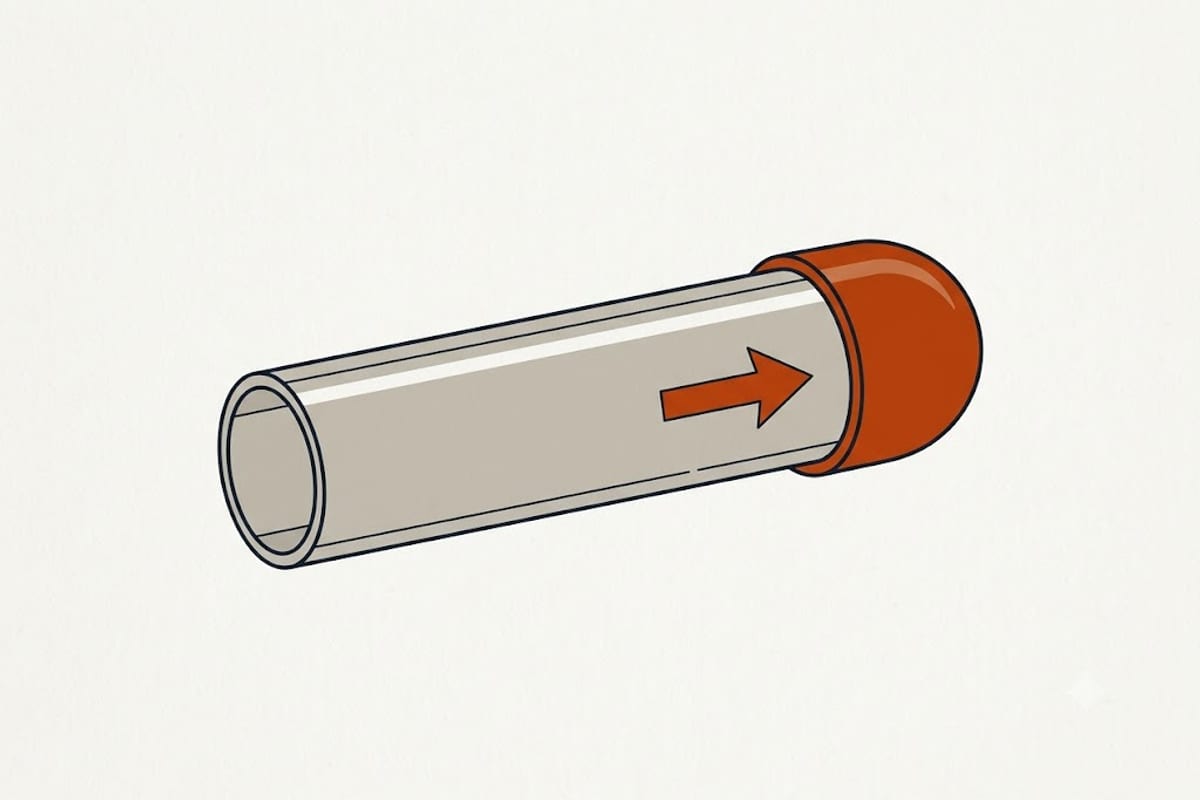
What it solves
Running a vent from a fixture to the roof means going up, through floors and walls and out through the roof structure.
For an island sink with no wall behind it, a fixture added in a basement, or a bathroom retrofitted at the far corner of a house, that run is frequently the hardest and most expensive part of the job.
An AAV fitted under the sink replaces it.
Where they are allowed
It varies, and the local rule is the one that governs.
The IPC permits them with conditions. Some jurisdictions adopting it amend that out. Some states prohibit them entirely for residential work.
Where permitted, the conditions typically include:
Accessibility. It must be reachable for replacement — not sealed inside a wall or under a floor.
Ventilation. The space it sits in must be ventilated, so it has air to admit. A sealed cabinet does not qualify.
Height. A minimum distance above the trap arm or the fixture's flood level.
A vent to atmosphere still required. Every drainage system needs at least one open vent, and AAVs supplement it rather than replace it.
Listing. Certified to the relevant standard, and installed to the manufacturer's instructions.
How they fail
Mechanically, and they fail closed.
A valve that has stiffened or fouled stops admitting air, and the fixture behaves as though it has no vent — gurgling, slow drainage, and eventually a siphoned trap and a smell.
Because the symptoms are exactly those of a missing vent, and because the valve looks fine, this is diagnosed late.
Life expectancy is commonly stated in tens of thousands of cycles, which is years rather than decades. Replacing one is inexpensive and takes minutes, provided it is accessible — which is why the accessibility rule exists.
Testing one
With the valve removed, the fixture should drain freely and audibly draw air.
Refitting a new valve and comparing behaviour is the quickest test, and the part costs very little. Where a fixture on an AAV has begun gurgling, the valve is the first suspect rather than the last.
What they are not
Not a substitute for a properly designed vent system. A house vented entirely by AAVs has no path for positive pressure to escape, which is why at least one vent to atmosphere is always required.
Not a fix for a badly configured drain. A trap arm that exceeds its length limit siphons regardless.
Not permitted underground or in a concealed inaccessible location.
Not a mechanical vent for a sewage ejector basin, which needs a real vent for the pressure it generates.
When to use one
An island sink, where the alternative is a loop vent that collects water and needs its own cleanout.
A single fixture added a long way from the existing vent system, in a jurisdiction that permits them.
A bathroom retrofit where a vent run would mean opening a ceiling above.
When to run a real vent instead
New construction, where the run is cheap while the walls are open.
Where several fixtures would depend on valves, which multiplies the failure points.
In a jurisdiction that prohibits them, obviously — and it is worth checking rather than assuming, because a permitted job with AAVs in the wrong county fails inspection at the point the walls are ready to close.